
Now scheduling in select ZIP codes · 11 states
Decks built right, from footing to railing
Custom deck building, replacement and repair — composite, PVC and wood — for homeowners in our listed service areas. One call gets you to a deck specialist.
One call to (888) 555-0123
connects you with a deck specialist.
Not sure you're covered? Check your ZIP first:
Service is limited to specific ZIP codes — not entire states. See all areas
1,270
Eligible ZIP codes
11
States with coverage
10
Deck services explained
4
Decking materials compared
Deck services
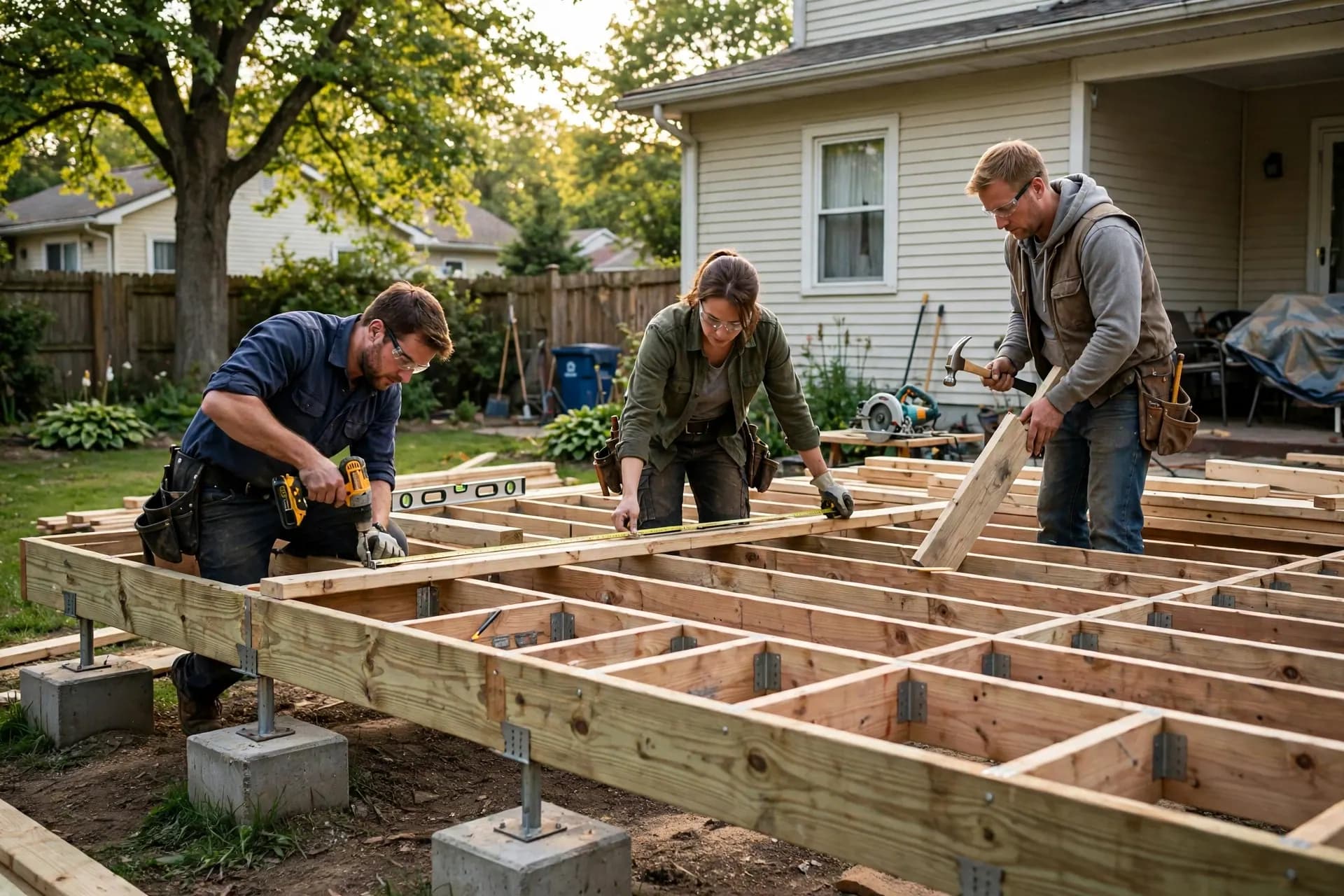
Every part of the deck, planned and built
Each service page explains the decisions, warning signs, process and scope factors — so you know what you're getting before work starts.
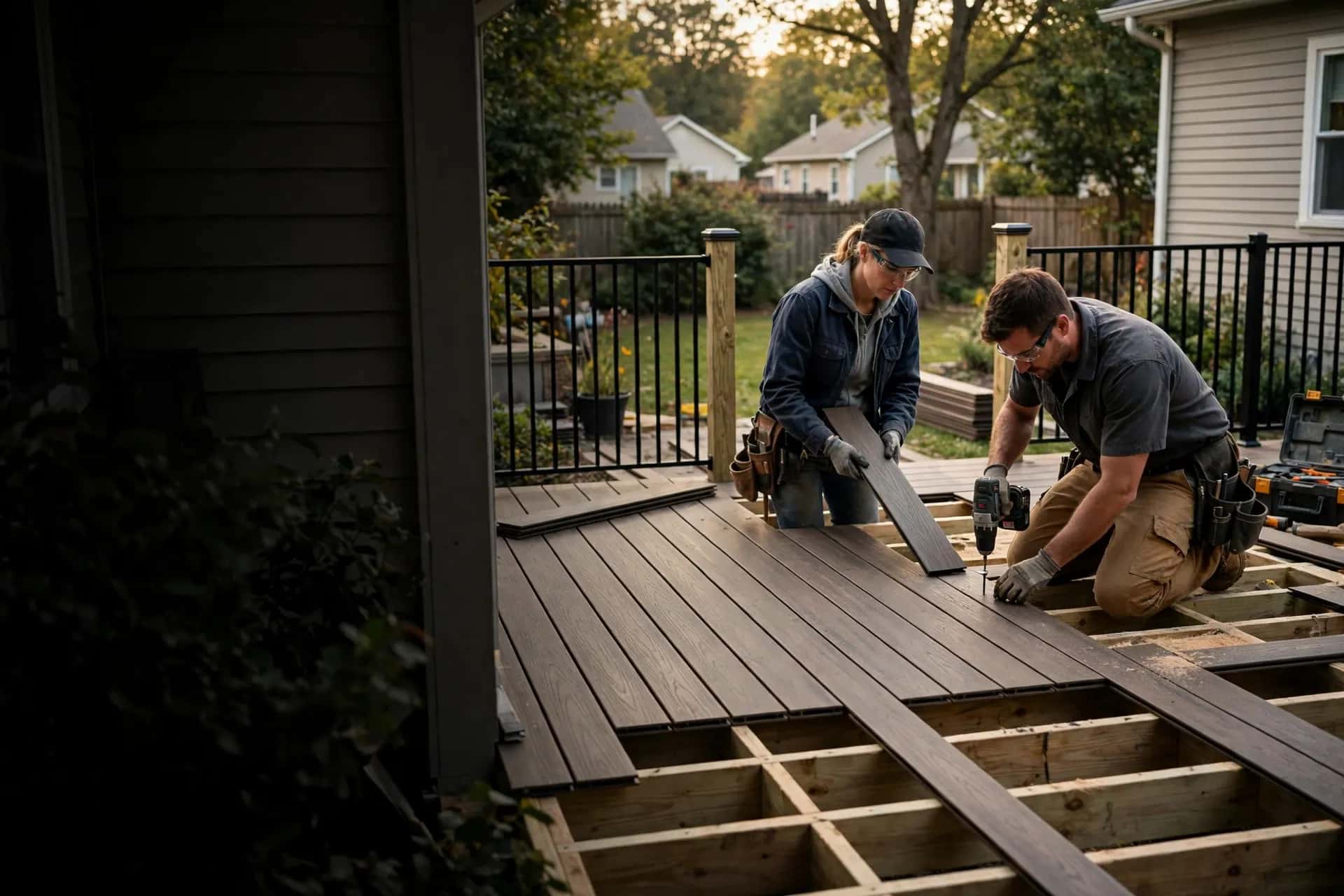
Deck Replacement
Learn more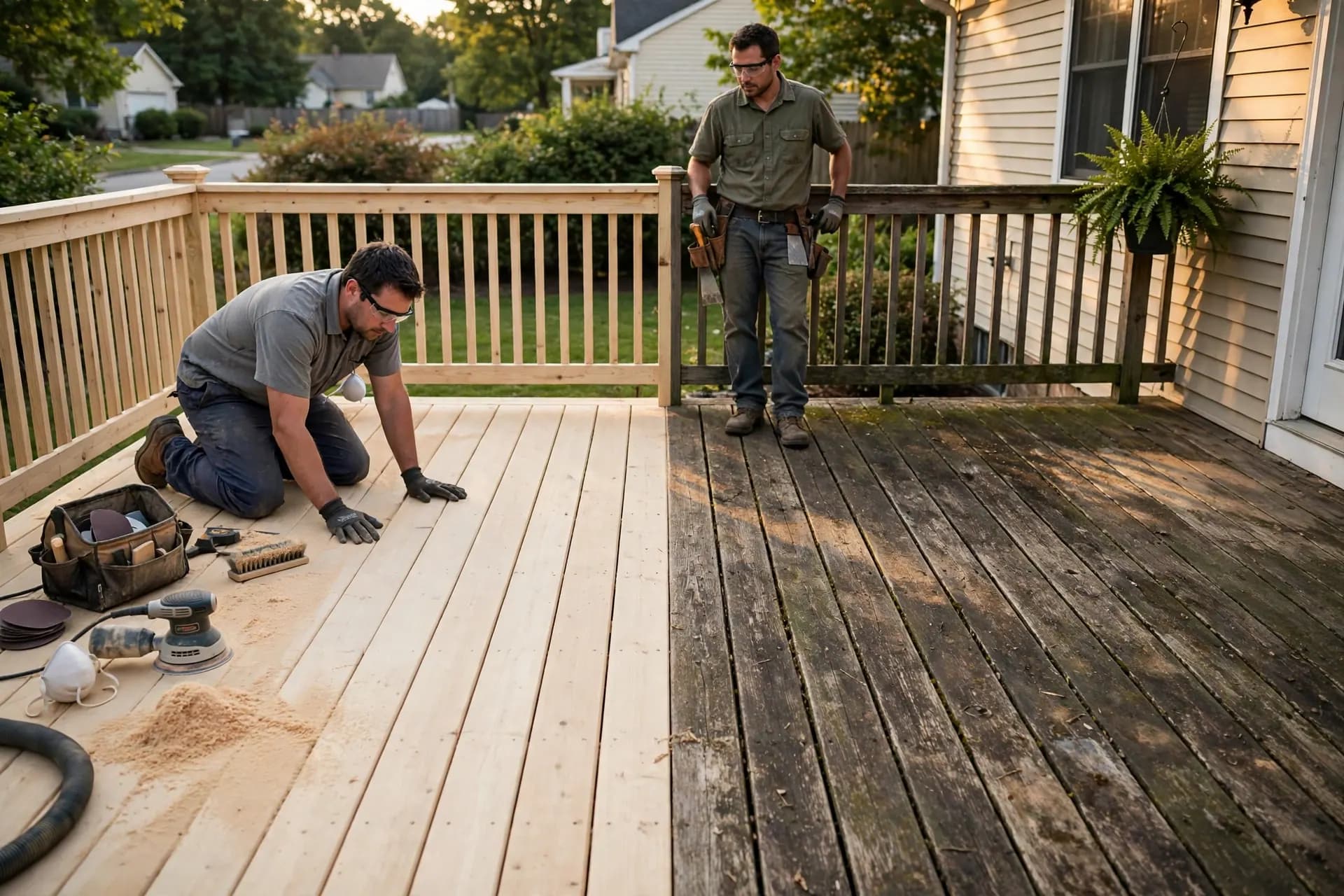
Deck Repair
Learn more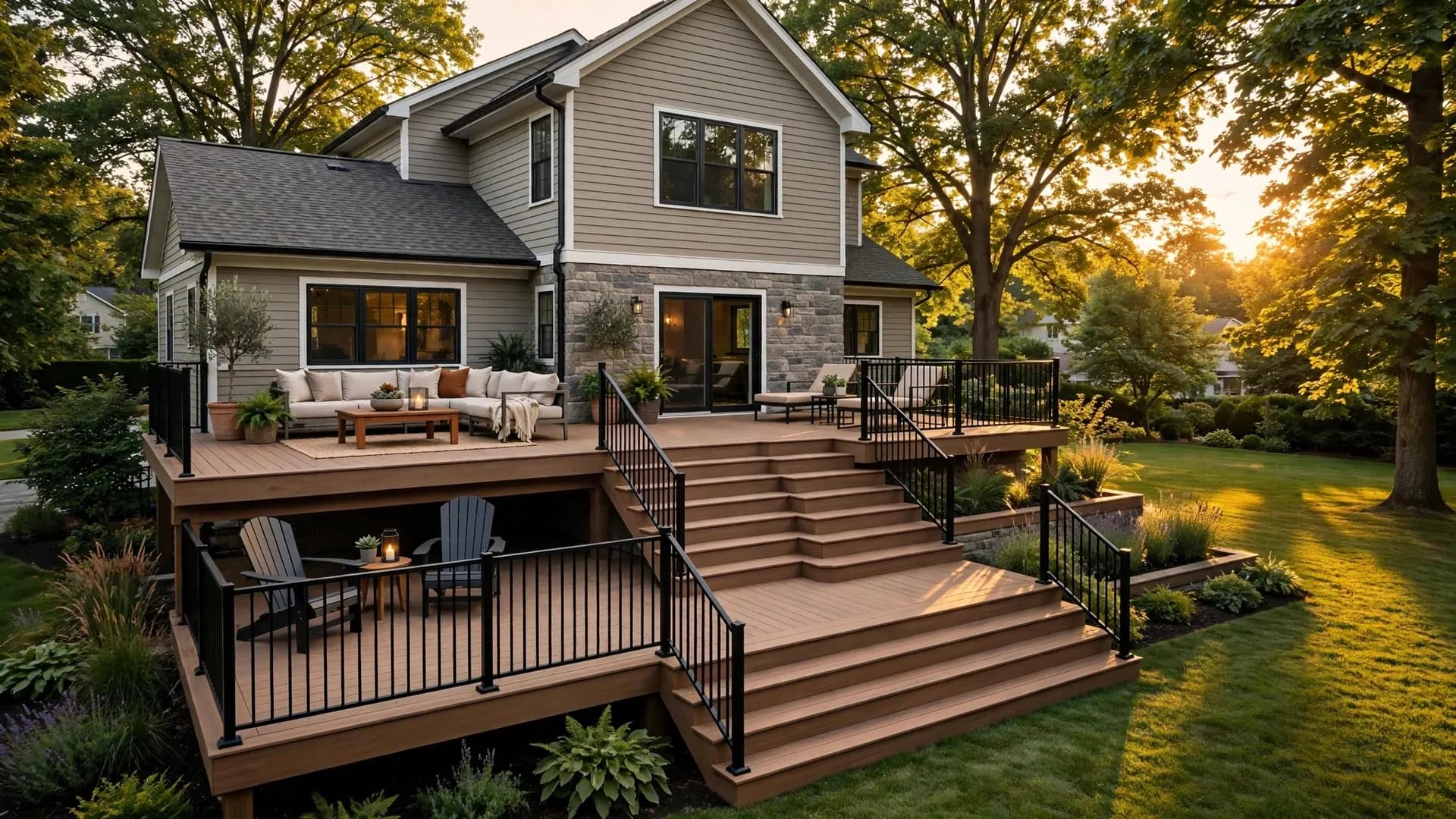
Composite Decking
Learn more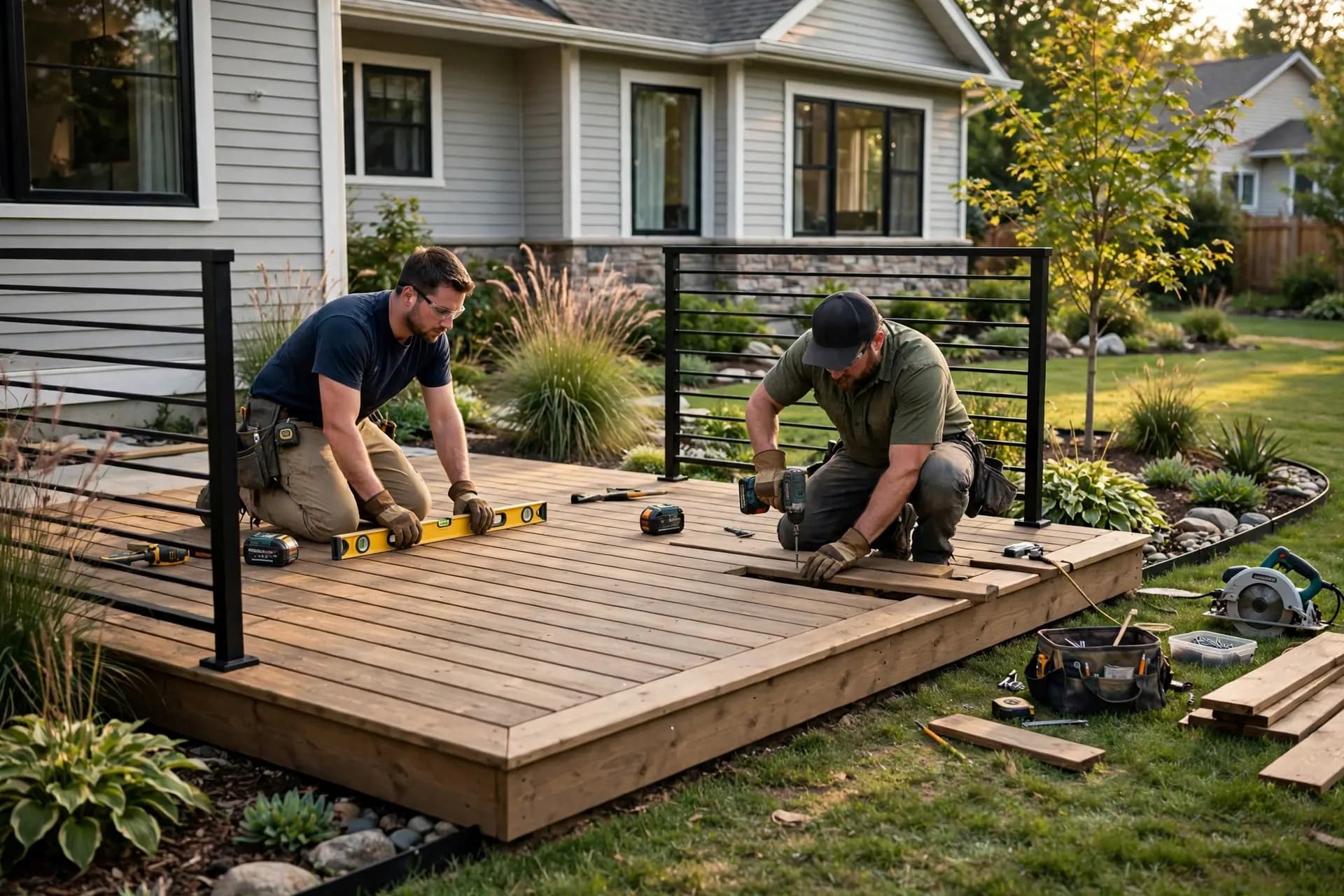
Deck Railings
Learn moreStart with your goal
What kind of deck project are you planning?
Pick the situation that sounds most like yours. Each guide explains the decisions, warning signs and scope factors in plain language.
A brand-new deck
No deck today, or you want to add one off a new door or walk-out.
Deck buildingReplacing an old deck
The structure is tired, unsafe or the layout no longer works.
Deck replacementFixing problems
Loose boards, soft spots, wobbly railings or shaky stairs.
Deck repairA fresh surface
The frame is sound but the boards are worn, split or faded.
Deck resurfacingSafer railings or stairs
Upgrade guards, handrails or steps without rebuilding the deck.
Railings & stairsLower maintenance
Done with staining every couple of years.
Composite deckingDecking materials
Composite, PVC or wood: side by side
The surface material sets your upfront budget and how much upkeep you'll do for years. Framing is typically pressure-treated lumber either way.
| Material | Upfront cost | Maintenance | Look & feel | Best for |
|---|---|---|---|---|
| Composite Decking | Moderate to high | Low — periodic washing | Wood-grain look, warmer in sun | Low-maintenance family decks |
| Pressure-Treated Wood | Lowest | High — clean and refinish regularly | Natural wood; weathers to gray | Budget-focused decks and all framing |
| Cedar Decking | Moderate | Moderate to high — finish to keep color | Soft, warm, aromatic | Natural wood appearance with less warping |
| PVC Decking | High | Low — periodic washing | Lightweight, smooth to textured | Pools, wet areas and low decks |
Repair, resurface or replace?
Build new, replace or repair: how to decide
The structure decides. If joists, beams, posts, footings and the ledger connection are sound, repairing or resurfacing is usually the better value. If rot or failure has reached the frame — or the deck no longer fits how you use it — replacement avoids paying twice.
Surface problems are easy to see; structural ones usually aren't. Look underneath with a flashlight, probe framing with a screwdriver and check that railings don't move when pushed. Our deck repair guide lists the warning signs, and if the deck is already unsafe, start with what to do about an unsafe deck.
| If this describes your deck… | Usually |
|---|---|
| Damage limited to a few boards, a railing section or one stair | Repair |
| Frame is sound; boards are worn, split, faded or splintering | Resurface |
| Rot in joists, beams or posts; ledger or footing problems | Replace |
| Layout is too small or doesn't fit how you live now | Replace or rebuild |
| No deck yet, or adding a new outdoor living area | Build new |
Design inspiration
Deck styles worth considering
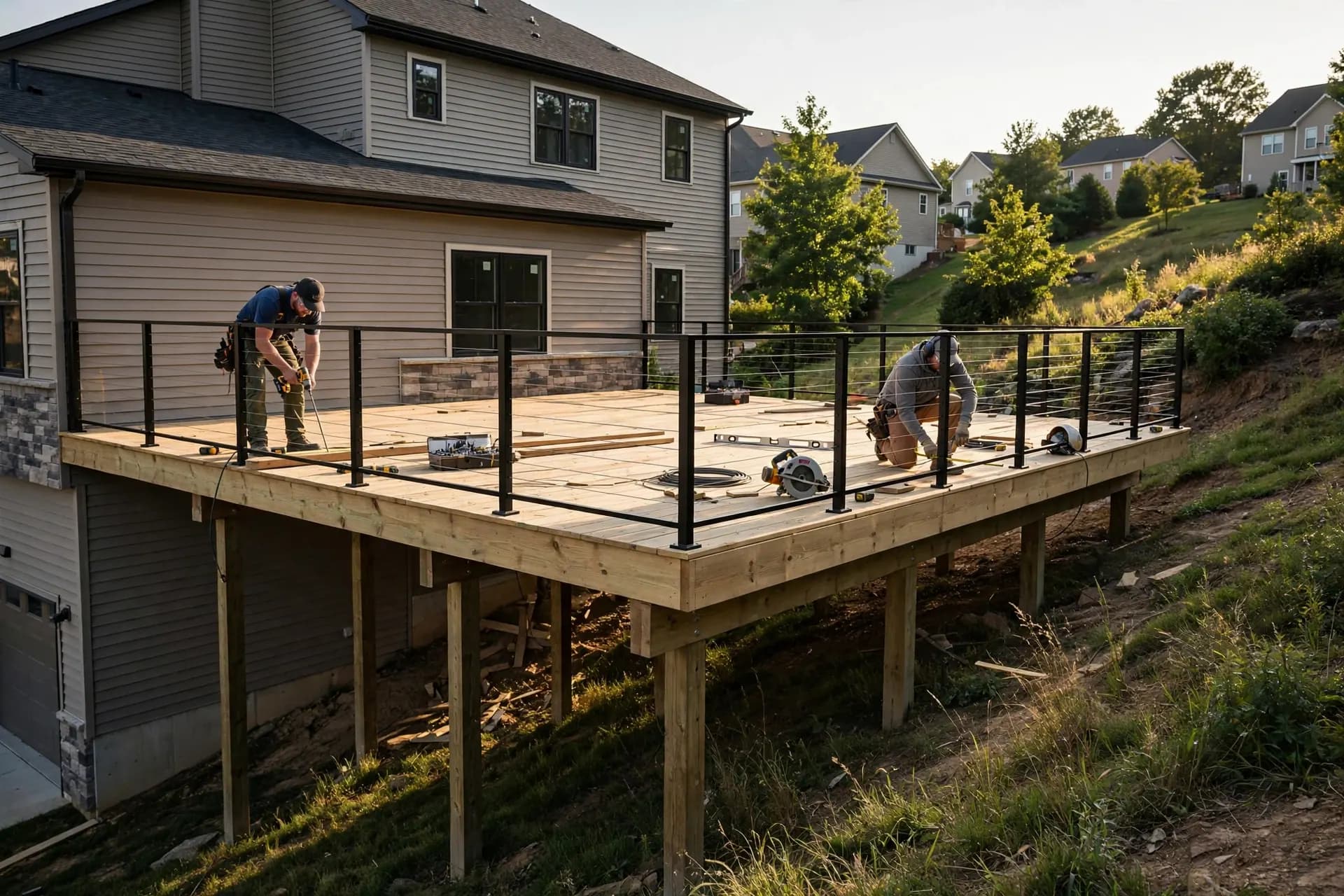
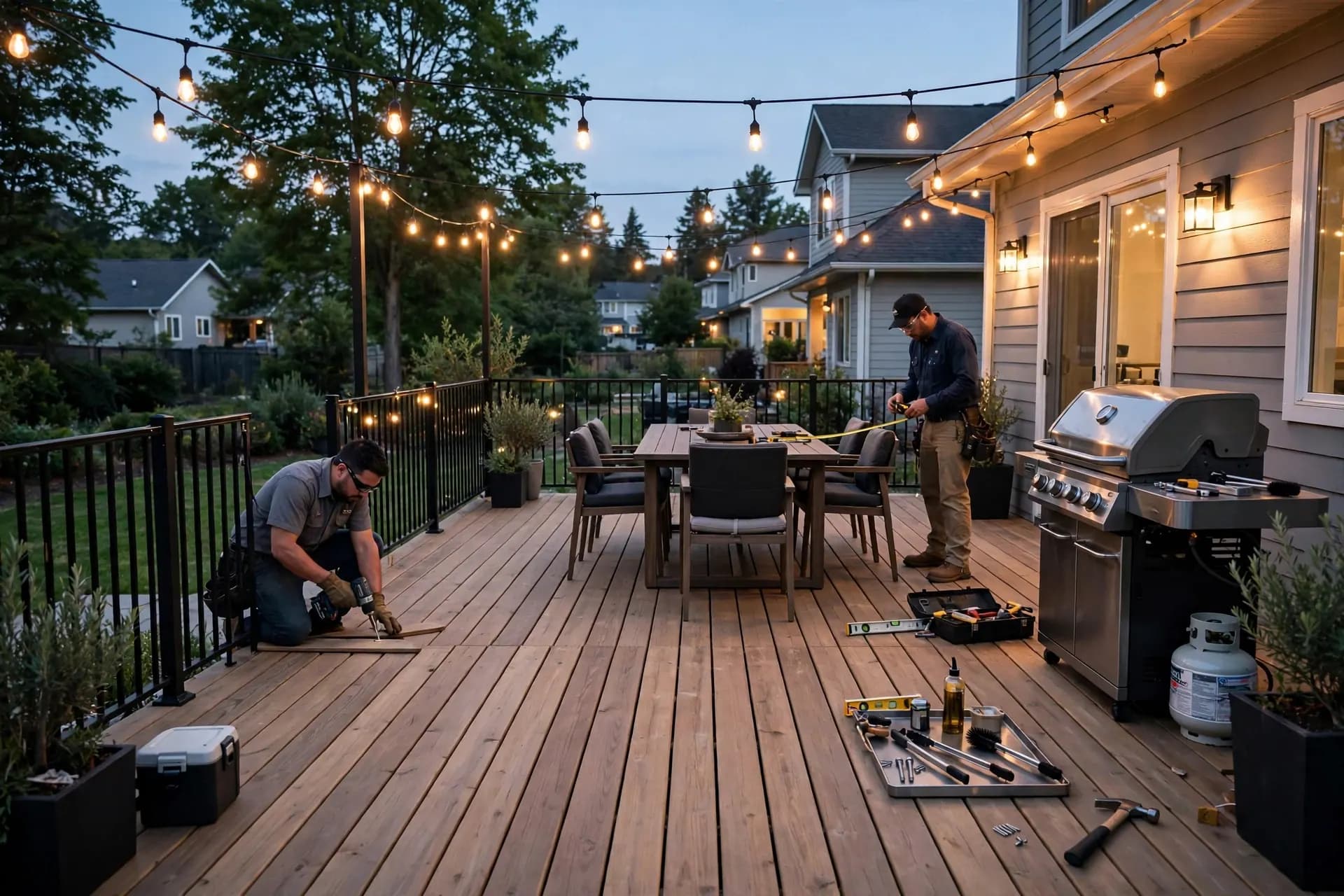
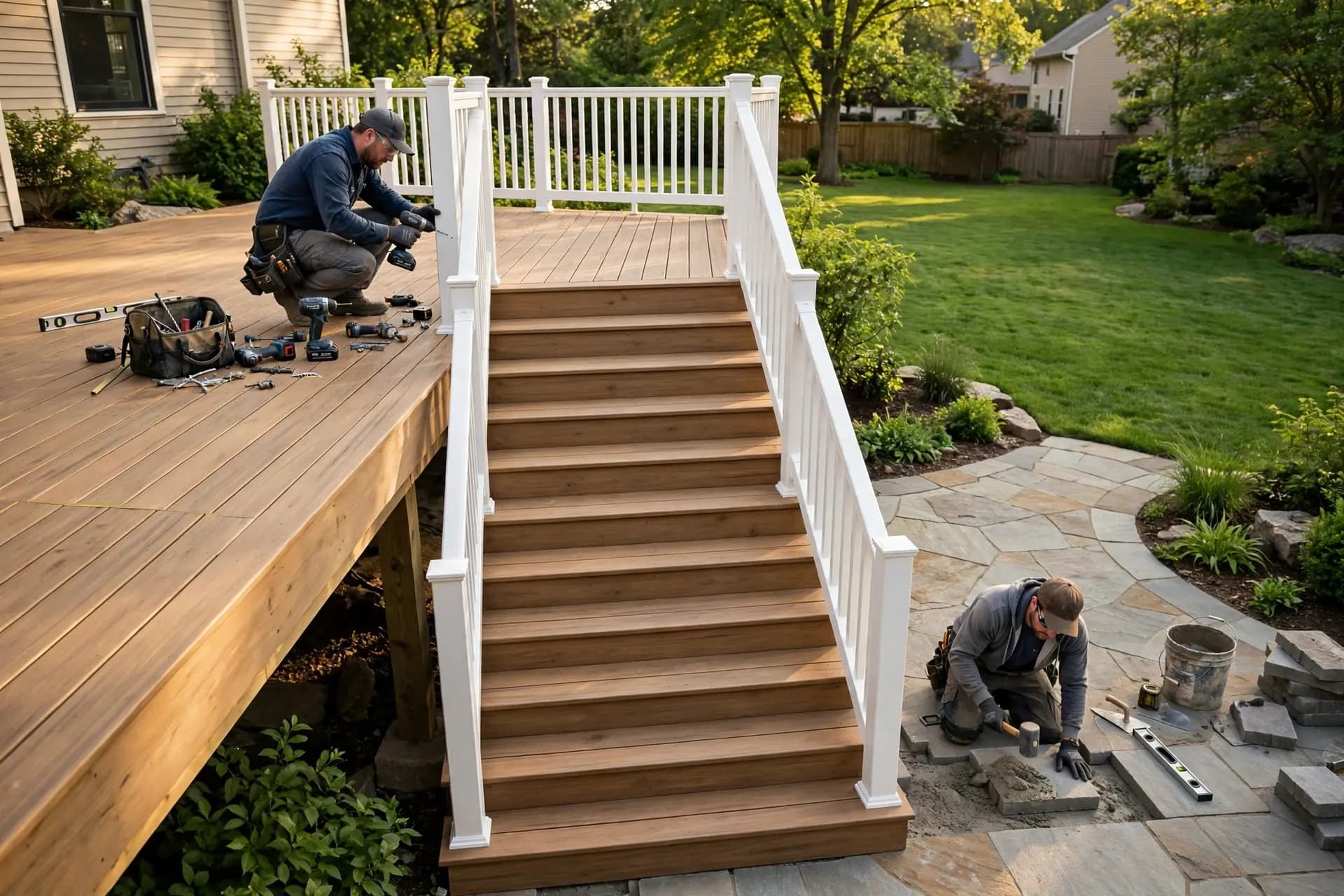
Common deck types and materials to help you talk through layout, height and finish options for your own project.
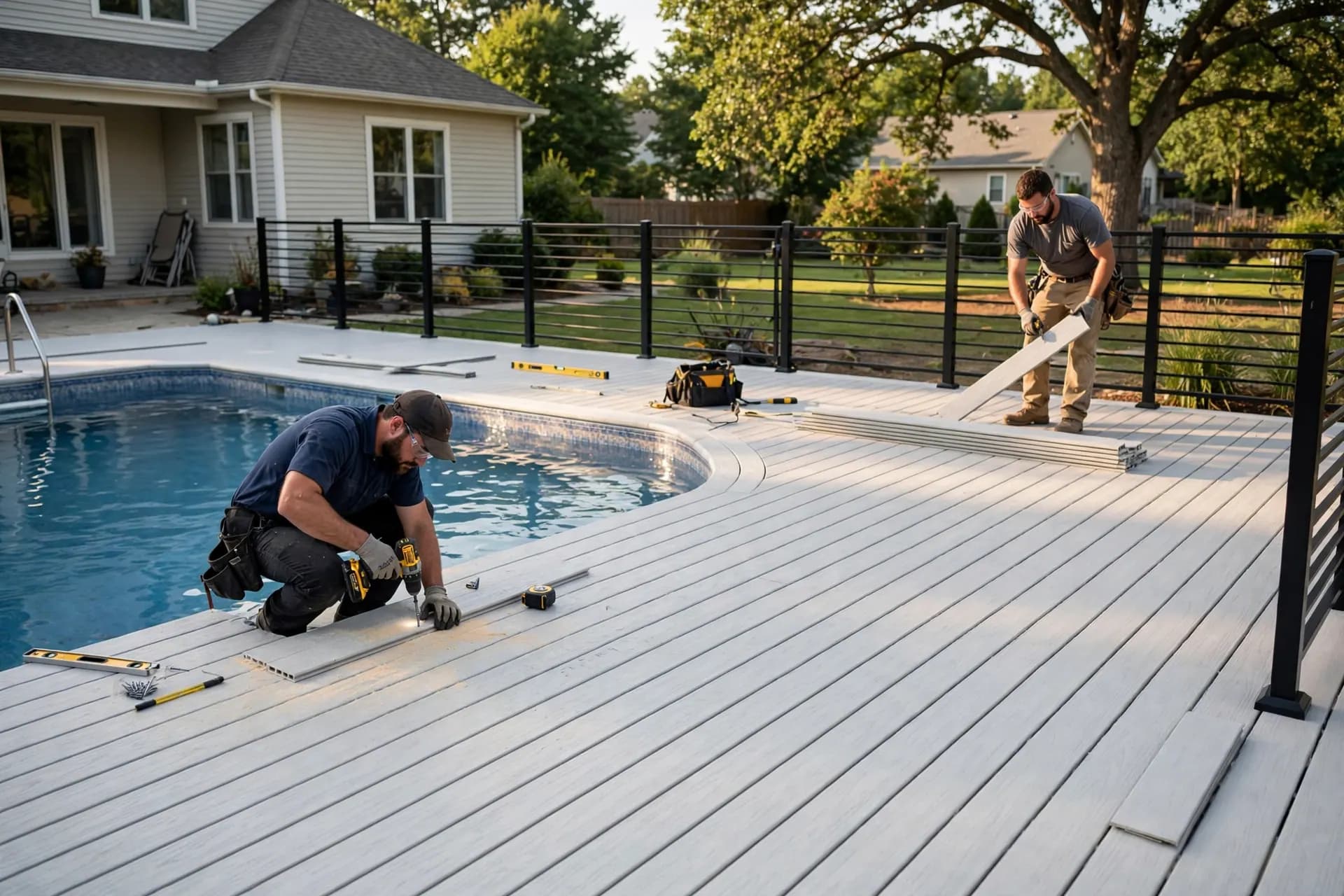
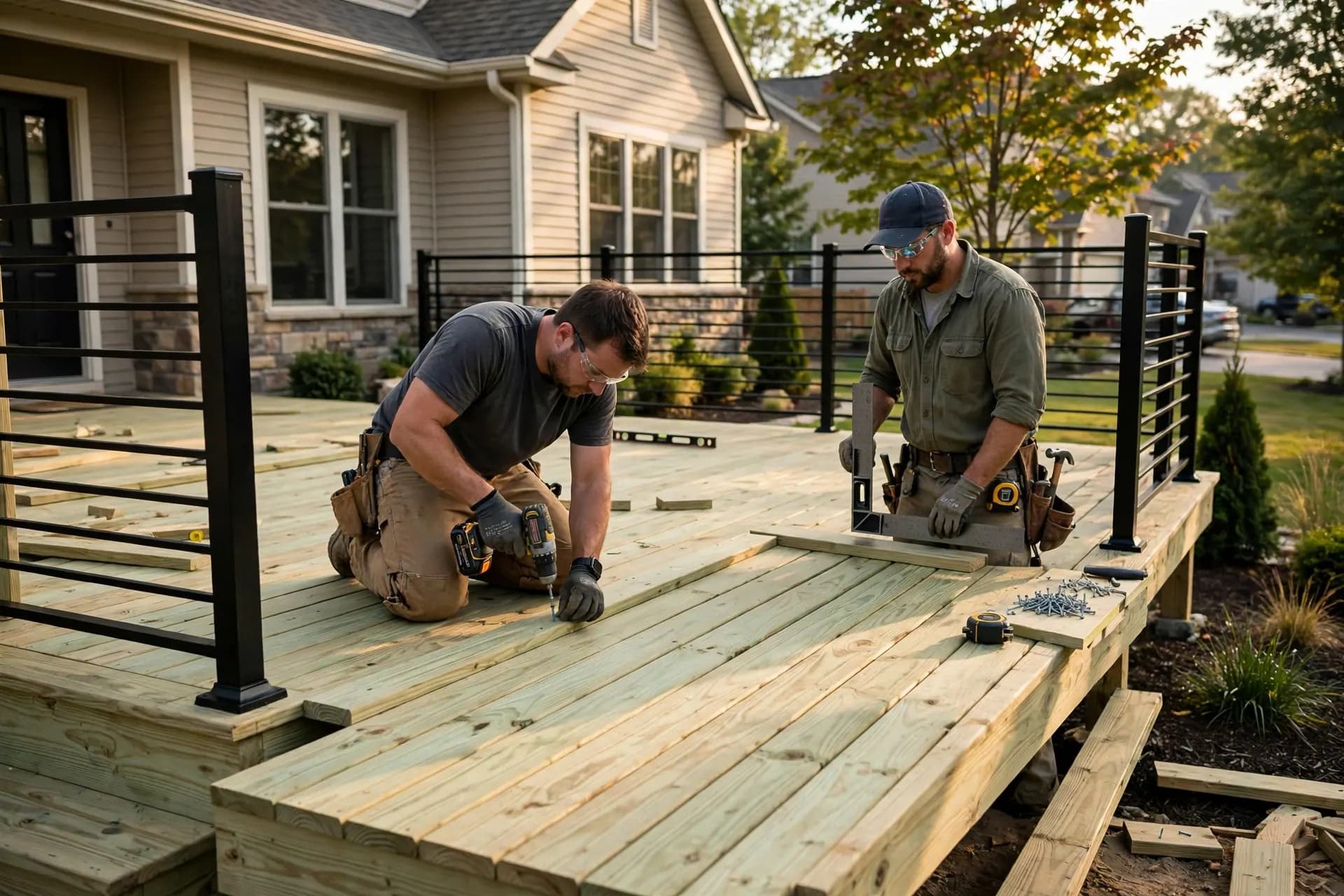
Before & after
What resurfacing can and can't fix
Can fix
Gray, weathered wood, splinters, minor checking, faded color, worn or split boards (by re-decking).
Can't fix
Rotted joists, a failing ledger, undersized footings or loose railing posts — those need structural repair first.
Worth knowing
Composite and PVC boards can go on an existing frame only when it is sound and spaced for the new boards.
Scope agreed in writing
Size, materials, railings, stairs and permits are settled before construction begins.
How it works
From idea to finished deck
- 1
Step 1
Call and share your goals
One call confirms your ZIP is covered and covers what you want the deck to do.
- 2
Step 2
Site review & design
Measurements, slope, doors, utilities and sun are reviewed; layout and materials are chosen.
- 3
Step 3
Permits & scheduling
Drawings and permit applications are prepared where the jurisdiction requires them.
- 4
Step 4
Build & inspect
Footings, framing, decking, railings and stairs — followed by any required inspections.
Project scope
What affects the cost of a deck?
We don't publish one-size-fits-all prices because decks vary too much. These are the factors that move a project's scope and budget.
Size and shape
Square footage drives materials and labor; angles, curves and multiple levels add complexity.
Height
Elevated decks need taller posts, bracing, guardrails and longer stairs.
Decking material
Pressure-treated pine, cedar, composite and PVC span a wide range of material costs.
Railings
Linear feet of railing and the system — wood, aluminum, cable or glass — make a big difference.
Site conditions
Slope, soil, access for materials and the distance from the house affect footings and labor.
Permits and drawings
Local permit, drawing and inspection requirements add time and fees.
Regional considerations
Your climate changes the right deck
Our service areas cover very different climates. These are the regional factors we plan around.
Cold winters & deep frost
Footings below the local frost line, snow load in the framing, and materials that tolerate freeze-thaw and snow removal.
Heat & humidity
Surface temperature, mildew resistance and airflow under the deck shape material choices.
Long wet seasons
Drainage, ventilation and moisture-proof materials matter most where decks stay damp for months.
Four distinct seasons
Hot summers, cold snaps and wide temperature swings make expansion gaps and sealed wood important.
Service areas
Where we build decks
Coverage is limited to 1,270 specific ZIP codes in 11 states — mostly in and around the metro areas below. We don't serve entire states, so check your ZIP to be sure.
- GeorgiaMetro Atlanta and North Georgia114 ZIPs
- IllinoisChicago's North, West and Northwest Suburbs123 ZIPs
- KansasJohnson County and the Kansas City Metro38 ZIPs
- MarylandCentral Maryland and the Washington and Baltimore Suburbs167 ZIPs
- MassachusettsGreater Boston, MetroWest and the North Shore148 ZIPs
- MinnesotaMinneapolis–Saint Paul Metro148 ZIPs
- North CarolinaCharlotte and the Lake Norman Area29 ZIPs
- PennsylvaniaPhiladelphia's Western and Northern Suburbs127 ZIPs
- TennesseeNashville and Middle Tennessee41 ZIPs
- VirginiaNorthern Virginia92 ZIPs
- WashingtonPuget Sound: Seattle, the Eastside, Snohomish and Pierce Counties118 ZIPs
Why professional planning
A deck is a structure, not just a floor
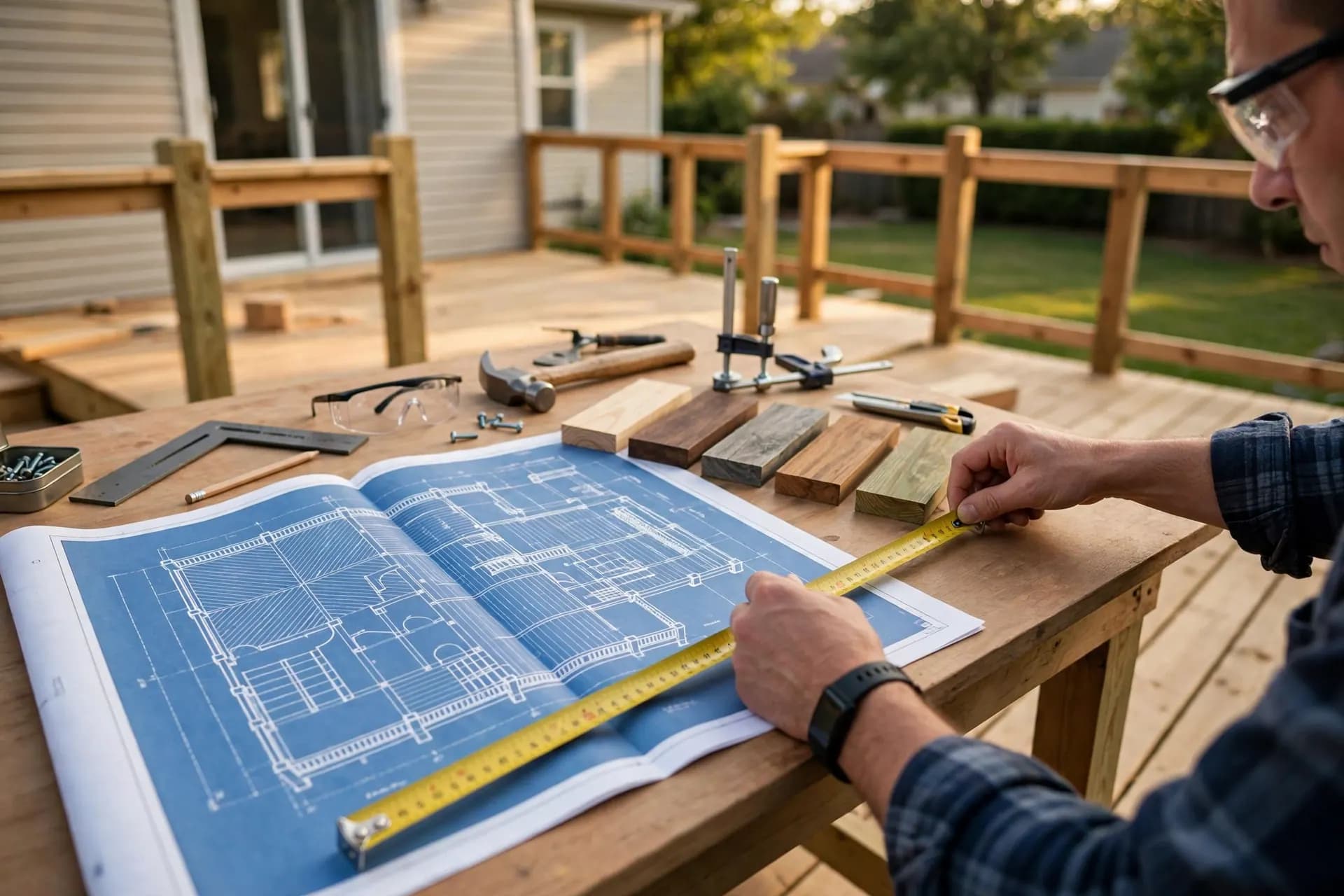
An attached deck carries people, furniture, snow and sometimes a hot tub — often several feet off the ground. Careful planning is what separates a deck that lasts from one that fails early.
Structure you can trust
Footings, ledger flashing, connectors and post anchoring are what keep a deck safe — and they're planned before anything is built.
Permits handled properly
Many decks need a permit and inspections. Planning around local requirements avoids delays and problems at resale.
The right material for your climate
Heat, humidity, snow and long wet seasons all change which boards and fasteners make sense.
A layout that fits your life
Furniture, traffic flow, stairs, sun and privacy are worked out on paper — where changes are cheap.
Deck guides
Answers before you call
Maintenance schedules, material comparisons, lifespan, permits and safety checks — written for homeowners.
- How-toHow to maintain a deckDeck maintenance is the routine cleaning, inspection and refinishing that keeps a deck safe and extends its life. What it involves depends mostly on the surface material — but every deck's framing, ledger and railings need regular checks.
- How-toHow long does a deck last?A deck's lifespan depends less on any single number than on four things: the surface material, how well the hidden framing is protected, how carefully it was built, and how consistently it's maintained in your climate.
- ComparisonComposite vs. wood deckingComposite and wood are the two most common decking choices. Wood costs less upfront and feels natural; composite costs more but trades staining and sealing for simple cleaning. The right answer depends on budget, climate, sun and how much upkeep you want.
- Problem solvingShould you repair or replace your deck?Repair a deck when problems are limited and the structure is sound; replace it when damage has reached the framing, ledger or footings in several places, or when the deck no longer fits how you live.
- How-toDeck permits: when you need one and how to checkMany jurisdictions require a building permit for new decks — especially attached, elevated or larger decks — and for major structural repairs. Rules vary by city and county, so the building department serving your address is the final authority.
- Problem solvingDeck safety inspection checklistA yearly deck inspection takes under an hour and catches most problems before they become dangerous. Work from the house outward and from the structure up, and bring a flashlight and a screwdriver.
Common questions
Good to know before you build
Straight answers to the questions homeowners ask most about deck projects.
Which areas do you build decks in?
We work only in 1,270 specific ZIP codes across 11 states, concentrated around metro areas such as Atlanta, Boston, Charlotte, Chicago's suburbs, Kansas City's Johnson County, Minneapolis–Saint Paul, Nashville, Northern Virginia, central Maryland, suburban Philadelphia and the Puget Sound. Use the ZIP checker to confirm your address is covered.
How much does a new deck cost?
It depends on size, height, material, railings, stairs, site conditions and local permit requirements. Rather than quote a generic number, we explain those factors on our cost-factors page and scope each project individually.
Should I choose composite or wood decking?
Composite costs more upfront but doesn't need staining or sealing. Pressure-treated wood costs less initially but needs regular cleaning and refinishing. Cedar offers natural beauty with moderate upkeep. The right answer depends on your budget, climate and how much maintenance you want.
Do I need a permit to build a deck?
Many jurisdictions require a permit for new decks, especially attached or elevated ones, and requirements vary by city and county. Check with your local building department before work begins.
Can my old deck be repaired instead of replaced?
Often, if the framing, footings and ledger connection are sound. When rot or damage has reached the structure, replacement is usually the better long-term value.
How long does a deck project take?
Construction on a typical residential deck often takes from several days to a few weeks. Design, permitting and material lead times can add time before construction starts.
Ready when you are
Planning a new deck — or fixing the one you have?
Call (888) 555-0123 to talk with a deck specialist about your project.